
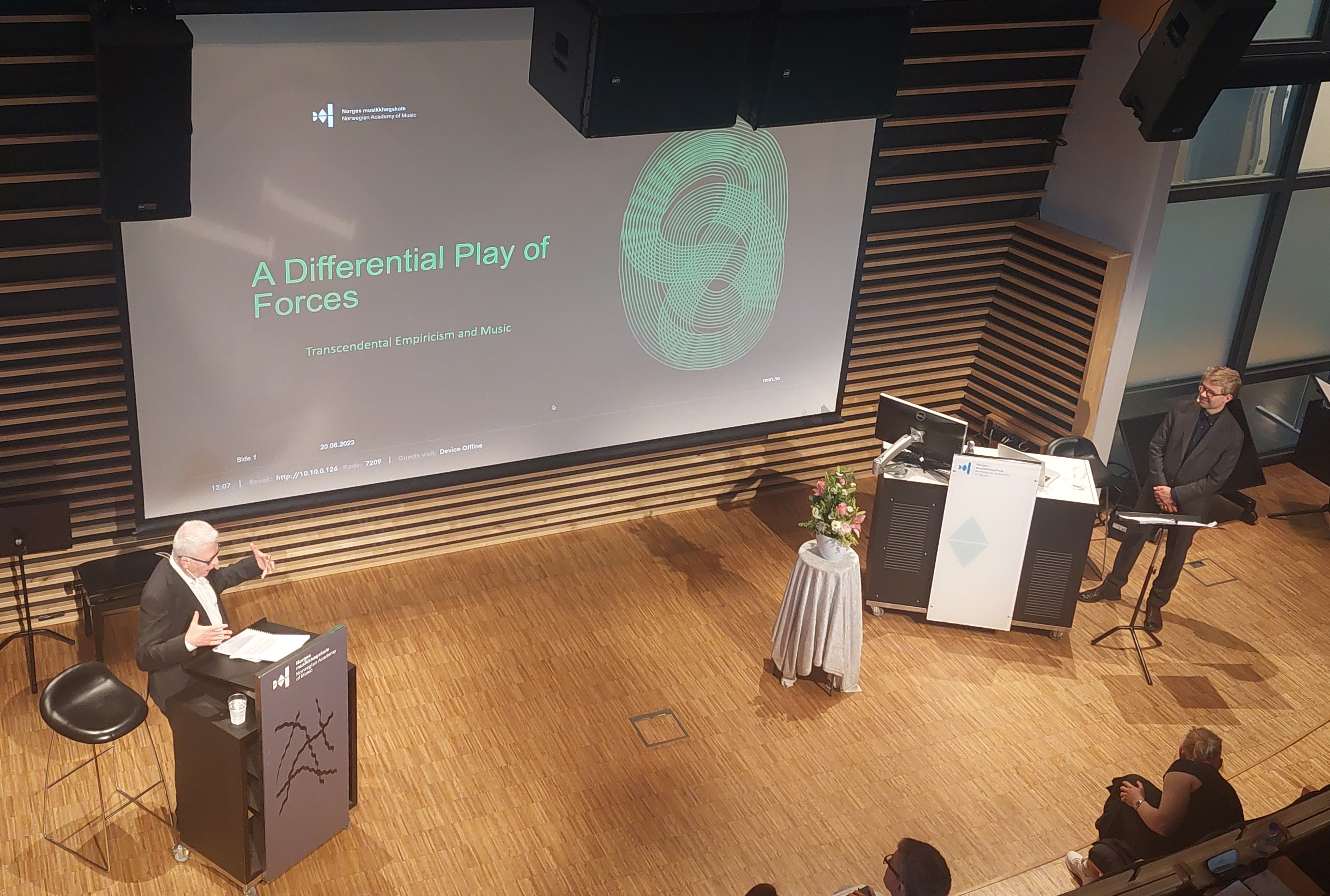
Transcendental Empiricism and Music
Public defence of the thesis for PhD, Norwegian Academy of Music, 20.06.2023
Problem of thesis
Thank you all for coming to this presentation and defence.
The background of this research is my experience with music, both through playing (the piano) and listening, and how this has stimulated both reflection and ‘existential experiences’. Two questions have followed me since a long time. One comes from the power of music to affects us so deeply and intensely. What is the reason for this experience, and what can it teach us? The other grows out of this first question and concerns the potentiality that I sense such experience harbour for further development. Could it be that musical experience and practice harbours a potential for further growth and synergy that we usually don’t take up? That is, could it be that musical experience concerns a fundamental aspect of our being that could be more systematically developed and explored if brough also in relation to other disciplines and practices? What can music tell us about the capacity to encounter and become with the world?
These questions form the background for my research, and as you can see, they are situated at the intersection between music and philosophy, between affective experience and thinking.
The French philosopher Gilles Deleuze, whose work I rely on in my dissertation, once said in an interview that one always writes with an ambition of reaching something that would be the common ground of words, and lines, colours, and sounds. Writing on art always has this aspiration Deleuze claims. The title of my dissertation – taken from another quotation of Deleuze – alludes to the idea of such a common ground. In Deleuze’s vocabulary, this idea has many different but closely related names, such as ‘the plane of immanence’, the ‘Body without Organs’, an ‘intensive life’ or ‘non-organic life’, or simply ‘intensity’. All these names can be related to the idea of a ground understood not as something static but as a field of becoming, composed of intensive forces.
Deleuze develops the idea of an empiricism related to this field of becoming – what he terms a transcendental empiricism. Ultimately this means an experience of the intensive forces that condition and produce what normally appears as something ‘given’ in experience. Such an empiricism therefore cannot rely on what is simply given. The forces that condition experience must somehow be revealed. And in this regard, Deleuze writes that art and aesthetic experience occupy a central role. Art is precisely an experimentation with the composition of sensible experience. Art can reveal the conditions of sensible experience not theoretically, but experientially. This naturally implies that art brings about a transformation of experience, potentially raising it to these intensive forces that condition normal ‘empirical’ experience. Furthermore, in his writing with Félix Guattari, music, and particularly the modernist music from the 20th century, is explicitly said to enable an encounter with intensive forces. Thus, in my dissertation I have set out to confront ideas about music with the philosophy of transcendental empiricism.
My aim has been to understand this philosophical position and explore how music can be understood in relation to it. On the one hand I have thematized music as a medium for the creation of a transcendental empiricism. But conversely, I have also sought to use this philosophical apparatus to understand ideas about music, ideas that I have extracted from the works of three composers: Arnold Schönberg, Olivier Messiaen and Giacinto Scelsi.
In this way the dissertation sets out to discuss the conditions for a transcendental empiricism both in a systematic way and in a way that situates it historically in relation the three composers. Systematically I have developed relevant concepts as they function in the philosophy of Deleuze and Guattari and brought these over into a musical context. The more historically oriented approach has taken ideas about music from the theoretical works of the three composers and tried to think with these ideas by expanding on them and reading them in light of Deleuze and Guattari’s philosophy.
Method
My aim has thus been to create a mutual illumination of ideas about music and the philosophy of transcendental empiricism. And as an exploration of ideas, I have almost exclusively engaged texts by the philosophers and the composers I study. While there are some references to actual compositions, these serve to exemplify the general ideas that I explore. The overarching problem of how music can be thought of as related to a transcendental empiricism has determined this methodological choice. The focus has been to understand the idea of music as a way to expand perception to include living forces, and to ground it epistemologically. I will return to this choice at the end.
Structural overview of the thesis
Now let’s look a little closer at the structure and content of the thesis. The dissertation is structured in three stages, moving from a reading of transcendental empiricism in the philosophy of Deleuze and Guattari (Chapter 2) to a discussion of central concepts in relation to music in Chapter 3. The last stage moves to the philosophical reading of the three composers’ texts and ideas (Chapter 4-6). The thesis concludes by a chapter that summarizes the finding and opens the perspective for further development.
In Chapter 2 Transcendental Empiricism: The Encounter with Intensive Difference and the Disjoining of the Faculties, I present my reading of transcendental empiricism. This is a complex philosophical position, and because time is short, I can only give a few indications. The main problem has already been outlined: namely how to create an empiricism of the intensive field of becoming. If I should reduce this complex operation to a few very basic intuitions, it could be the following:
The world is a process. However, we tend to objectify, to think and to sense in terms of distinct objects and stasis, and we tend to regard relations as something external. But as Deleuze put it in an interview: I don’t believe in things. Things are, in essence, events. Relations are not secondary to the things, but what compose them. We must therefore find a way to discover the relations between things as what they are, namely as flows, as a play of intensive forces. The title of this chapter alludes to Deleuze’s ‘method’ for accessing this processual nature of the world. To sense intensity requires to disjoin the faculties from their normal operation in a common sense. And the sensation of an ‘intensive difference’ is the beginning of this process. This means that sensation becomes caught up in an immediate apprehension of the sensible as event, outside of the system of memory and of conceptual reflection: An immediate sensation immanent to the presence of the sensible is thus both the object of an encounter, and what raises sensibility to its transcendent exercise, Deleuze writes.
Much could be said about this, but a central point to take over to musical contexts is how this encounter on the one hand depends on sensing outside pre-established forms of experience that come from the past, and on the other on the generation of a field of intensity. The composers that I study will have both these aspects built into their creative thinking. However, before I develop my philosophical reading of the three composers, I explore in Chapter 3 the concept of intensity more generally with regard to music.
Music as Temporal Synthesis and Intensive Encounters – Chapter 3
Because music is time and movement, it brings us in close proximity to the domain of intensive forces. We sense an intensive life with the listening body when we experience music. But with regard to this I bring in an important distinction which Deleuze makes in Difference and Repetition, namely that between intensity in itself and intensity meditated by qualities, such as tones, colours and other sense-impressions. In ordinary experience, intensity cancels itself out in and as the production of a quality, Deleuze writes. The intensive forces of a colour or a tone is mediated and covered by the colour or tone itself. But the question of a transcendental empiricism is precisely how a direct encounter with intensive forces can occur. Furthermore, Deleuze and Guattari claim this is exactly what music from the twentieth century aspires to create.
In the second part of this chapter, I therefore discuss the question of what it could mean in a musical context to produce a field of intensive force that could lead to an immediate apprehension of intensity. At this point the relation between the tendency towards the molecular and micro-differences in modernist music and epistemology is discussed via Deleuze’s concept of microperception. Microperception is an element of sensing that is normally unconscious, hidden below the threshold of awareness, but which in principle can be raised to conscious experience. The key here is difference. To the extent that experience comes closer and closer to the difference between to sensations, this difference progressively less external and more genetic or intensive. Microperceptions are all the differences that produce a quality in sensation. If these intensive differences come to or ‘invade’ consciousness, the normal, qualitative and external distinctions between red and green, this tone and that tone, subject and object, all turn into intensive relations. Relations as forces become prior to external distinctions between objects of consciousness. Thus, aesthetic experience morph into a transcendental experience of the plane of intensive forces, what Deleuze also calls the plane of immanence. A related question discussed is to what degree we are still speaking of music and artistic experience. Has music become the launchpad for a wholly different process – what does music signify in this perspective? Could music be understood as going beyond itself, in and through the musical experience, leading to an expansion of what music is and can be? This is the underlying argument of this chapter, effectively re-actualizing the ancient idea of music as both a historical and a cosmic reality.
Having come thus far in establishing the theory of transcendental empiricism and its relation to music, I proceed in the rest of the dissertation to explore to what extent the idea of music as a way to encounter intensive forces can be found in the ideas of three central composers from the 20th century. As such, I turn from looking at music from the point of view of transcendental empiricism to look at transcendental empiricism from the point of view of ideas taken from the musicians. I will briefly mention the main ideas that I develop in each of these chapters.
Arnold Schönberg and the Dodecaphonic Reflection of a Unitary Musical Space – Chapter 4
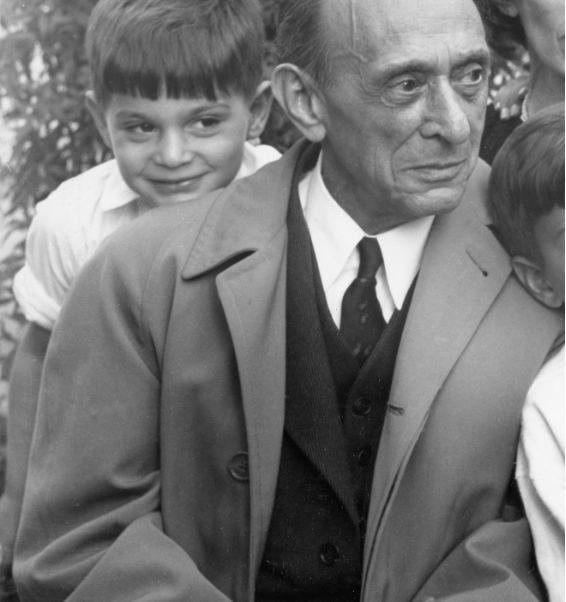
My argument in Chapter 4 on Schönberg is that by inventing the 12tone principle Schönberg seeks to create a music which reflects a field of intensive forces understood as an Ideal virtual space. This is how I interpret the relation between dodechaphony and his conception of the ‘musical Idea’. In other words, music is understood precisely as a way of expressing and perhaps also communicating the domain of the intensive. To argue for this, I look at Schönberg’s thinking in light of Johann Wolfgang von Goethe and his morphology. This enables me to understand music as a play of contractile and expansive forces, and temporal processes as relating to a kind of non-chnonological time, where time becomes a virtual space. In this indirect way, Schönberg’s ideas about music is related to central ideas of transcendental empiricism.
Olivier Messiaen: Dazzlement and the Directional Meaning of Music – Chapter 5
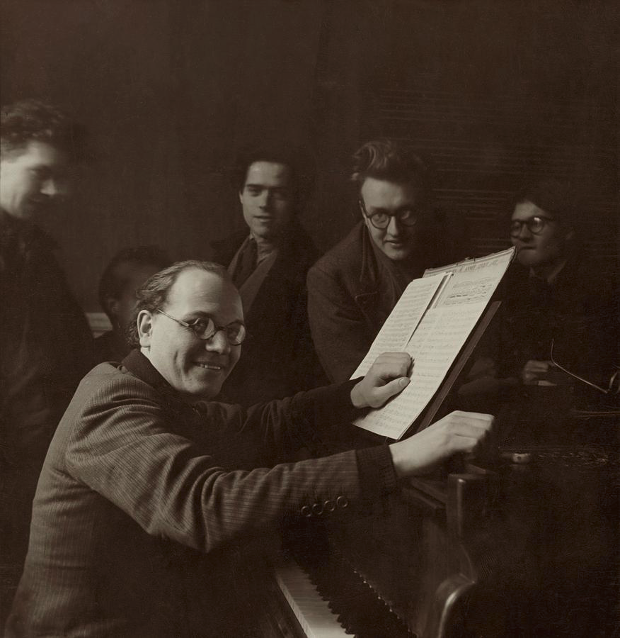
Moving on to Olivier Messiaen I take my point of departure from what he says about dazzlement as the directional meaning of music. Dazzlement is a word which denotes an overwhelming experience of the intensity of sound or colour, leading to what Messiaen describes as a kind of spiritual illumination. I relate this to transcendental empiricism by way of two ideas.
On the one hand I interpret Messiaen’s ideas about rhythm in relation to the idea of time as an intensive force experienced through rhythmic contractions and expansions. Secondly, I explore Messiaen’s ideas about natural resonance and after-images in relation to Deleuze’s notion of the intensive forces conditioning perception through the above mentioned concept of ‘microperception’.
Together, these two elements contribute to an understanding of dazzlement as coming about through a musical experience, effectively parallelling the idea about a transformation of aesthetic experience into a transcendental experience of the plane of immanence above. Furthermore, the discussion also connects these compositional techniques to contemplative practice, showing an intimate relation between musical practice and other forms of experimenting with the conditions of sensible experience.
Chapter 6 – Giacinto Scelsi: The Interior of Sound and Music as Intensity
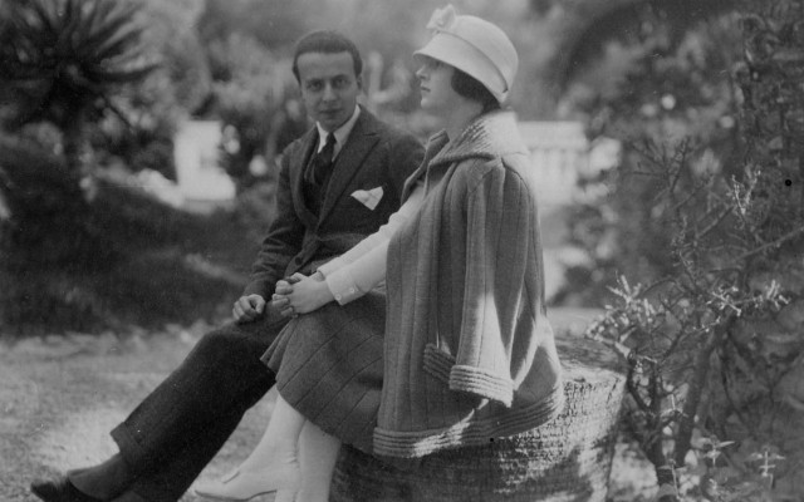
In the chapter on Giacinto Scelsi I develop two main ideas. The first is that Scelsi’s musical thinking concerns the idea of an intensive depth of the tone, which I theorize as the tone-monad. The second, related to this, is that the form of aesthetic experience that correspond to Scelsi’s idea of an intensive music, is a state of ‘pure perception’.
Both these ideas are developed based on sources Scelsi refers to in his writings and interviews, but I also make use of Scelsi’s descriptions of his own allegedly mystical experience of this dimension. By thus connecting these ideas I attempt to show how Scelsi’s aesthetics can be understood as related to the creation of transcendental empiricism. Also in this chapter the relation between music and contemplative and meditative processes are discussed.
Music and Transcendental Empiricism – Chapter 7
The last chapter summarizes the preceding discussions and argues for the idea of music as an experimental field for the creation of a transcendental empiricism. Here I also suggest that this may represent a convergence between music, living thinking and the differential play of intensive forces, and consequently that the nature of intensive nature of the world is that of a cosmic music. Thus, the world understood as process or event – as a differential play of forces – can be understood as a kind of inaudible music. As other authors have noted before, Deleuze and Guattari develop a modern version of the idea of musica mundana, that is, a music of the world. With the contribution of this research, this idea can be extended to include the epistemological foundation of an experiential access to this domain as well as new insights into how three central composers from the 20th Century have thought about and created music to effectuate such an expansion and transformation of musical experience.
Outcome, open questions, and problems
To end this presentation, I’ll point to some limitations of the thesis and try to situate it in relation to a broader disciplinary field.
Even if the thesis discusses the concept of intensity in the musical thinking of Schönberg, Messiaen and Scelsi, it remains on a philosophical level, and has not been followed analytically into details of actual musical compositions.
Why haven’t I ventured into this aspect of the study of music? I believe that in order to carry the question of intensity over into concrete musical works and their analysis, looking at their aesthetic technique and their effects in light of transcendental empiricism, the kind of groundwork that my dissertation offers is a necessary precondition. At least for me, it is only as a result of the research done thus far that I can see the contours of how these ideas could be followed more into the details of actual compositions and how musical technique relates to processes of consciousness expansion.
In this thesis I have attempted a mutual illumination of transcendental empiricism and thinking about music, both in general and via three central composers from the 20th century. As such this is a philosophical work that may contribute to the field of Deleuze and Guattari studies and the philosophy of music in general. However, I believe it can have relevance also outside this discipline.
In any kind of performance, thinking is involved, and even if the concepts of philosophy and music’s affective thinking are different domains, they certainly interact and, ultimately, they are both a matter of intensity. As such, philosophy and music are both practices that relate to the question of how to make forces sensible, to bring us in touch with life in a deeper and more conscious way.
This interdisciplinary element is reflected in my work in that I have sought to develop not only the conceptual framework for thinking about music, but also how this framework relates to various practices. These are not necessarily musical practices in a traditional sense, but they have an inner relation to music for each of the composer discussed.
As such, transcendental empiricism is not an idea externally related to musical practice, but I have sought to bring it to light as being one and the same as the musical practice. But at the same time musical practice is implicitly extended beyond its traditional domain. This may be compared to how musical materials has been extended to include all sorts of non-musical elements, such as theatricality, installations, conceptual elements and so on. Thus, even if this thesis is philosophical in nature, I hope that it can also contribute with a groundwork for developing an extended concept of performativity and practice.
And on this note, thank you for your attention!

Color-enhanced scanning of inner ear (cochela). The whole organ is just a few millimeters long. Credit: Dr. David Furness Wellcome Collection
‘One is obliged to follow when one is in search of the ‘singularities’ of a matter, or rather of a material, and not out to discover a form; when one escapes the force of gravity to enter a field of celerity; when one ceases to contemplate the course of a laminar flow in a determinate direction, to be carried away by a vortical flow; … And the meaning of Earth completely changes…’ (Deleuze & Guattari, 2007, p. 372, my emphasis)
The thesis is published as open access through the Norwegian Academy of Music
 The wondrous music of becoming